Monday, June 1, 2015

One week away!


Saving Ducks and Felling Trees

May 25-29 at A.M. Cuddy Gardens

To say this week has been eventful would be an understatement. The gardens are lively with blooms, ducklings are being hatched and we are working hard to prepare for the open gardens. Sue, a professor in the program has been out this week organizing, inventorying, and pricing all the plants that are in the sale next weekend.  We couldn’t do it without her!


Since there shouldn’t be any more frost warnings we have moved all the tropical plants and cacti outdoors from inside the residence.  We have quite a collection of cacti and succulents including very large and old jade and agave plants. The collection of rare and unusual cacti have arrived from the campus greenhouse along with  tropical plants including hanging baskets and many  more plants for the upcoming sale. The patio is becoming a jungle!  It’s a good thing Lucas finished the renovation on the pond early this week.


There has been a momma mallard duck nesting in the compost pile for nearly 3 weeks. We have done our best to protect and not disturb her, even made sure she had plenty of water within an easy reach.  What a lovely day to see ducklings just hatched and ready to make their way to the pond.  To ensure safe travels we helped them along the way. The pond is quite far from the nesting area.

Amongst the joys of this week there has been some sadness as some trees had to be taken down.  One river birch beside the dry garden just wasn’t flushing any growth this year. Jen from OMAFRA says it’s quite typical of river birches with multi stems to girdle themselves. This causes stress from lack of water and nutrients and the trees become more susceptible to pests and diseases.  The old plum tree out by the Magnolia garden has been noticeably suffering for many years. When Mike saw what little growth was coming this year he called it. It’s time he said, the tree just wasn’t doing any good in the gardens.  Sad to lose such a old huge tree, the structure added interest in the garden and the tree will surely be missed.

Monday, May 25, 2015

The Open Garden is fast approaching!


May 19-22 at the Beautiful A.M. Cuddy Gardens

It has been a short week with the holiday Monday but busy and productive none the less. We are quite excited for the Open Garden June 6th and 7th as it is fast approaching.

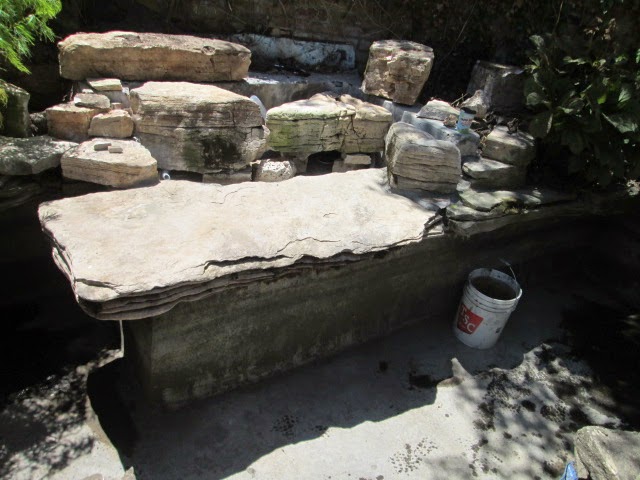
Lucas has been working away in the patio garden. The pond has been leaking so he drained it, cleaned it, figured where the leak has been coming and fixed it by shifting rocks and resealing. Lucas also worked on putting a splitter in so where the water comes up from the pump it will go in multiple directions.  


The iris border was tackled this week.  As iris like conditions more on the dry side and prefer their rhizomes close to the surface we do not add any mulch to this bed. Unfortunately that means more weeds, however, they are easily taken care of with a dutch hoe and rototiller.  Within the Iris border is a collection of Lilac, Kentucky Coffee Trees and even Rhubarb. We cut out the flower stalks on the rhubarb to keep an upright shape. If the flowers were to be left on the plant would become very floppy.  I harvested some small shoots of the rhubarb and made a delicious apple rhubarb crisp!


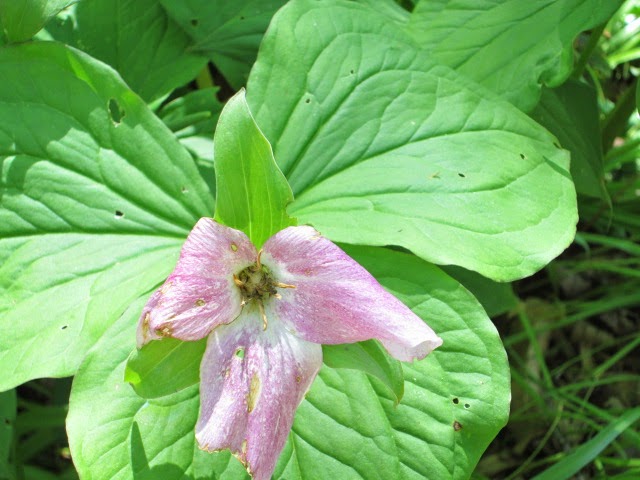
In preparation of the open gardens plants have been added to the dry garden, the alpine garden and the woodland garden. Some are annuals and fillers, others replacements and required paper work to be filled out and plant labels made as we are a botanical garden.  Within the woodland garden a lot is happening. Many native plants are blooming such as trillium, jack in the pulpit and May apple. Many ferns and hostas are growing on nicely.


We have been working  hard to have the grounds in tip top shape for the open gardens and are excited to share our passion with you.

Friday, May 15, 2015


Second Week of May at A.M. Cuddy Gardens

We had another busy and productive week out here at A.M. Cuddy Gardens.  Our week started off with the finishing touches of the pot-in-pot nursery which included bringing out our big trees, setting in the drip lines, grading the soil and seeding.

We installed a strip of ledge rock around the testing station for irrigation. This rock edge will make mowing the lawn around the test station easier. The rock edge also holds the mulch in around the station.

The ever famous rose garden was attended to this week. This included weeding, fixing bed edges and pruning out dead/diseased stems.  Many sub shrubs, such as calicarpia, have broken bud, started growth, and require their yearly pruning. The perennial border has had some attention this week as well. There has been a lot of garden editing taking place, as well as divisions for more plants for the upcoming open gardens and plant sale.
 
Wednesday we made the call to bring in all tropical plants that we had just placed outdoors due to the risk of frost and low overnight temperatures. It was a sure good thing we did as Thursday morning there was frost. 


It's amazing to see so many plants in bloom and the different layers of the gardens here. Hope you can join us for the open gardens June 6 & 7. Other than the shock of frost and cooler temperatures by the end of the week, it was another lovely one in paradise!  
 

Friday, May 8, 2015


First Full Week of Work at A.M. Cuddy Gardens (May 4th- May 8th)
 
 
Monday started of the week with ripping out Boxwoods that have been suffering extensive damage from the Boxwood leaf miner for many years. We used the back hoe on the Kubota tractor to lift them out roots and all. We carried on applying a thick layer of mulch to the garden bed known as the prairie border. In the patio there was euonymus growing, we also ripped those out. The decision to remove the euonymus was made to make room for espaliered apple trees from Hillen Nursery. These apple trees have been grafted onto dwarf root stock and have three different kinds of apples on one tree. In order for cross pollination to occur and fruits to be borne on apple trees you need to have different varieties.  There will be a few of these apple trees available at the annual plant sale in June. Tropical plants and bulbs that have spent the winter indoors are being brought out to enjoy the lovely weather we've had this past week.


We continued the mulch around to the gardens by the classroom. The turf stone that was installed in the Autumn required more top soil so a few bucket fulls were added and raked through.  The flagstone pathway leading to the classroom needed some repair. It was a great experience to lift and re-set a flagstone pathway.
 
Throughout the week work has been done to level out the lawn area between the house and greenhouses. Removal of large twigs and soil preparation for seeding, the grass seed was sown with the Kubota tractor and power seeder.
 
 
A lot of irrigation work has occurred this week. The smaller greenhouse was hooked up to an existing lateral line and we installed overhead irrigation in the house. 
 
For a few days we worked at setting up the pot-in-pot nursery production. We marked out the holes to be 4 feet apart on center. Used the back hoe to dig the initial holes. We then placed pots in, ensuring there were all level and inline with one another. Trenches have been dug along the pots to install a drip irrigation system. This irrigation system has a valve on every row so we can isolate areas that may not require a lot of water. The pot-in-pot production is a great asset to our nursery. Over wintering is very simple as the roots are below grade and wont freeze. Trees are put under less stress when sold, no digging out root balls. Pot-in-pot production can grow tress in fields where the soil may be less than desirable for growing. It has been a lot of work, however, worth it for all the bonuses.
 
Shade curtains have been installed onto the hoop houses as it has already become to hot in them. The young seedlings we grow prefer and perform better under the shade curtain.


All in all a fabulous first week. A lot is in bloom and buds are bursting! The Magnolia trees are spectacular! We have learned a lot about many different aspects of the industry and had great weather for it too!  


Wednesday, April 22, 2015


Ben W. & Anina F.


April 17th-19th 2015


FRIDAY:


Our weekend started off with Friday being equipment day! There was lots of excitement and opportunities to try new equipment and ask questions. It was also bitter-sweet, because it was the last official classroom gathering of the term, and of our program! Our Friday was off to a good start, and we got settled in at Cuddy’s around noon hour. The gardens are bursting with spring energy. There are so many crocuses and daffodils; it’s a real treat for the eyes. We had a lovely sunny day to finish off our afternoon. Lucas gave the two of us instructions as to what is expected out of the weekend. The main focus area is the entry way to the student classroom. The interlocking stone was laid by our class last year, and it certainly formalizes the area and serves a practical function. However, some clean up needed to be done, and a good layer of soil was added to the stone, in order to give a smooth-compacted surface. The Kubota tractor with the front end loader was used to disperse the media. The tractor also came in great utilization for carrying over burnable material, compost, stone, etc. Creating edges and mulching the surrounding garden beds were part of the project, and the area feels very tidied up and formalized. Our afternoon went quickly, and we prepared ourselves for a productive upcoming weekend.

SATURDAY:


Our Saturday started early, but we had a stellar day; weather wise. The day began with watering all the plants in the hoop-houses and surrounding, this took both of our hands at tackling them all. Onto our first task of the day was to complete the front soil-compaction. More media needed to be applied, raked over and then watered in, so that the soil would not blow away after clean-up. 

 
After that, we pruned and transplanted some surrounding plants that needed to be re-spaced. A big project was creating a new flagstone path to the cemented flag-stone court yard area. Correct positioning and digging holes to the right height was crucial, but rewarding to see the finished product.
Another timely project was removing all of the English ivy from the side garden bed perpendicular to the classroom courtyard. This Ivy was no longer beneficial, it is very aggressive, and part of Cuddy’s mission statement is to not have invasive species as part of the collection.
The English ivy was best removed by hand and required pulling away strands at a time; we removed it all, and felt accomplished! The sun was amazing on Saturday, It felt like summer. We both had red cheeks and necks from being outside exposed all day. It was a long day, but we made excellent progress and we locked up Cuddy’s for the night.


SUNDAY:


Sunday fun-day! Today started off with checking the hoop-houses and watering all the stored plants. We wasted no time and got straight to work. The tractor had to be signed out again, there was more media to transport, and the vehicle became a real asset. Aside from moving soil and mulch and gravel, there was lots of clean up to be done. The excess soil on the turf needed to spread out for the grass seed to take hold, and to create proper elevation where there are dips in the land from stress on the lawn. There was other clean-up tasks to be done, the greenhouses and tool shed got a bit of a sweeping and the bait traps were collected from the winter set-up and stored away in the tool shed. During our break we worked on our plant project and talked with Michael Pascoe about summer co-ops. We chose a yellow Hellebore species
and captured some great pictures in full bloom. Unfortunately in the latter half of the day rain rolled in and we had to clean up our tools a little earlier than expected. Luckily this gave us time to asses our accomplishments from the past couple of days and organize our work. Once the rain subsided final clean-up was in order and any final pruning, sweeping, and general maintenance kept us busy till the end of the day. Over the span of the weekend, we tidied up the front garden beds to the classroom significantly and properly leveled media in accordance to the interlocking stone. We successfully pruned back a lot of winter die-back from plants such as hydrangeas. We successfully removed a large patch of English ivy and mulched the new bed. All the garden beds received fresh mulch and a new edge to correspond to the interlocking patio. The shape of some of the beds had to be re-vamped to flow with the interlocking stone area as well. We had a great weekend, with wonderful weather, lots of reminiscing, and lots of experience using tools, equipment and vehicles. And a sense of using all of our knowledge from the past two years, and putting into practice our critical-thinking skills and educated judgments. It’s strange leaving Cuddy’s for the last time, but rewarding knowing we left an area much better than when we arrived to it. A piece of us is there, and a piece of Cuddy’s has left with us. All the best for the graduating class of Hort. Tech. 2015! It’s been a pleasure.


Plant Profile

Michael’s Opinion: The term hellebore itself comes from the Greek term “helein” which translates to “injures/destroys”. This refers to the toxic leaves, stems and roots of the plant which are poisonous if ingested. As well, “bora” means food. The Yellow Lady Hellebore in particular is one of the hybrid hellebore seed strain (known as the Lady series) developed by Gisela Schmiemann of Cologne, Germany.

Botanical Information:
Family- Ranunculaceae
Genus- Helleborus
Species- x hybridus ‘Yellow Lady’
Category- Herbaceous Perennial
Type- bushy, clump-forming
Origin- Europe
USDA Hardiness: 4-9
Canadian Hardiness: 2B-8A
RHS Hardiness: H4-H7
Temperature (°F): -30 -25
Height: 30-45 cm
Spread: 45-60 cm
Growth: Medium
 
Description and Information:
General Description- Helleborus x hybridus ‘Yellow Lady’ is a perennial most often planted in groups in a shady woodland garden. It has showy, cup shaped flowers and is a striking groundcover all year long.  
Characteristics: This plant is one of the first perennials to produce blooms in the spring season and is deer and rabbit resistant as the leaves are poisonous as well.
Shape: Bushy, and mounded
Landscape: Yellow Lady Hellebore can be used as an accent, border, or container plant. It is often in a naturalized area but it can also be used as a cut flower.
Propagation: Helleborus xhybridus ‘Yellow Lady’ is propagated from seed in the spring; however, these plants will take two-three years to flower.  Division takes place in late summer to early fall.
Cultivation: This plant grows easily in well drained, moist, alkaline soil. It prefers partial to full shade.  Flowering stems can be cut back after bloom to promote new leaf growth. Prune the old leaves to the ground in late winter so that blooms are maximized.
Pests: Yellow Lady Hellebore is not susceptible to many insects or diseases as roots, stems and leaves are poisonous. It is occasionally prone to crown rot and leaf spot.
Notable Specimen:  The A.M. Cuddy Gardens, Strathroy, Ontario, Canada.
Habitat: Horticultural Origin
Leaf Description: This plant has glossy, leathery leaves that are deep green in colour. They are long, narrow, and deeply lobed. As well, they are lance-shaped to elliptic and have serrated margins.
Flower Description: Helleborus xhybridus ‘Yellow Lady’ flowers around March-May. The flower stalks develop in early spring bearing a showy cup-shaped bloom. The ‘Yellow Lady’ blooms are approximately 5cm in diameter and creamy yellow in colour with distinct spots on the inside.
Colour Description: This plant has dark green leaves and vivid yellow coloured blooms.
Texture Description: It has a smooth, leathery foliage texture and a soft, light flower. The stalks are smooth as well.


Tuesday, April 14, 2015

Connor and Stacey Weekend Duty


Cuddy Weekend Practical

April 10,11,12, 2015

Stacey and Connor


            It was a good early Friday morning for Connor and Stacey to start off a wonderful weekend out at the Cuddy Gardens. The weekend started off by the students doing their CLT testing. The testing consisted of corrective pruning, and proper use of backpack blower and chainsaw equipment. Once the Training we started working on bringing the woody plants from poly house two out of the poly house and into the outside space. Stacey had a good pace of cleaning out the emerging weeds and leaves that had fallen off as the deciduous plants went dormant for the winter, while Connor placed the plants outside of the poly house. Removing all the access from around the plant helps decrease the chance of disease or pests to the plants.

                After all the testing from the day was done Stacey and Connor helped with the clean-up of the CLT testing stations and taking all the materials into the tool shed. Leaving out some of the equipment used in the testing to dry out over night before being able to put away.


 On Saturday Stacey and Conner were lucky enough to have the company of Justin out on the ground to help them along with the tasks to complete for the day. Students went back to the second poly house working on getting the rest of the woody plants ready for the growing season ahead. Sorting all the plants by plant name and facing all the label tags to the back of the pot for people to be able to see what the plant name is. Also sorting the deciduous plants away from the evergreen plants and spacing them for maximum growth. Also with the spacing leaving an aisle every forth row for workers and customers to walk down and access plants.

 Nearing the end of the day finally all of the weedy plants were out of the poly house and able to soak up some nice sunny rays on the two warm days had this weekend. Then Connor and Justin took down the poly covering the hoop house. Placing the wooden holders for the nails to keep the poly on the hoop house back behind the containers neatly stacked. The entire poly was taken away to be recycled. While this was going on Stacey was sweeping up the inside of the hoop house of all the leaves along the ground and underneath the perennial plants that where inside the hoop house. Also Stacey removed all of the bait traps out of the hoop house and got rid of any extra material still inside the trap


Another beautiful day for Stacey and Connor to finish off their practical session on the Sunday. Nice weather with a high reaching 17 degrees Celsius, perfect for the start of the growing season for the woody plants brought out of the hoop house. We started the day doing a little bit of construction. Placing some ledge stone underneath the picnic tables brought out to the Cuddy Gardens. These stones will help secure the tables and benches lay flat on the ground. After this was completed we went back to the hoop houses cleaning up the dead out of the perennials. Also watering the woody plants placed outside of the hoop house. As the lovely day continued on Stacey and Connor took the poly off of the third hoop house and bundled it up so it was ready to be recycled. Nearing the end of the day we placed some pylons by the front of the classroom to let students know of the path to take when coming in Monday morning. The coned off area is to help redirect away from the mucky, trampled turf.


Plant Profile

 
Muscari  armeniacum (Grape Hyacinth)
 
Family
Asparagaceae
Genus
Muscari
Species
armeniacum
Category
Bulbs, Perennials
USDA Hardiness Zone
7b - 8a
Canadian Hardiness Zone
7
RHS Hardiness Zone
H5
Temperature (°C)
-35 ( -10)
Temperature (°F)
-30 - 15
Height
15-30 cm
Spread
7-15 cm
Growth
Fast
Flowering Period
April, May


General Description : Small blooming bulb with narrow dark green, and panicles of violet flowers in grape like clusters.
ID characteristic: Vibrant violet colour, Petit size, grape like flower formation.
Propagation: Can be divided from offsets or grown from seed.  In optimal growing conditions it will self-seed, can be invasive.
Cultivation: Plant bulbs in fall, 3” down with 3” spacing. Keep soil moist in spring, decrease water as the plant begins to die back.
Pests:  No notable pests
Notable specimens:  A. M. Cuddy Gardens, Stathroy, Ontario, Canada
 
References
Canada Plants. (n.d.). Retrieved April 12, 2015, from http://www.canadaplants.ca/display.php?id=1221
Muscari armeniacum - Plant Finder. (n.d.). Retrieved April 12, 2015, from http://www.missouribotanicalgarden.org/PlantFinder/PlantFinderDetails.aspx?kempercode=q880
PlantFiles: Grape Hyacinth. (n.d.). Retrieved April 12, 2015, from http://davesgarden.com/guides/pf/go/692/


Chad and Carly Weekend Duty


Friday April 3, 2015

The day started off gloomy with fog; however, we were full of life and energy ready to get the day started.  We started off the day by signing out the equipment and cleaning the patio areas. 


 We used a backpack blower, rakes, brooms, and wheelbarrows to remove all the dead leaves and debris.  It was then onto filling the turf stone that we installed in autumn.  For this we used brute strength, rakes, shovels, cultivators and wheelbarrows.  We moved soil from the somewhat frozen pile of soil to fill the holes and around the turf stone.  We then feathered it all out to make it look great!   The wheelbarrow ended up making more tire marks in the area in front of the soil piles so we ended up having to forgo fixing that area.  We then decided to go start cleaning up the dry garden pruning, weeding and cleaning up the leaves.  It was then time to clean up for the day. Much to our surprise the water was turned on in the tool shed.  What a great day, we were able to properly clean our tools. 
We then started to fill in the tire tracks in front of the turf stone with soil which was no easy task, given the muddy circumstances.


Saturday April 4, 2015

We were welcomed this morning by frozen soil! We started out the day by gathering the required tools for day.  We attempted to complete more of the filling in of tire tracks; however the soil pile was frozen so we decided to again tackle the dry garden to further maintain that area.  A couple of the gardens were still frozen and under snow which made it difficult for us to complete. We then moved onto cleaning up around the dry garden and pruning back the Hydrangea plants back to 2-3 nodes. This also included cleaning the crown of the plant and removing the dead stems first. By doing this it provided us with ample time to wait for the dry garden and the soil pile to thaw a bit so we continued with maintaining the dry garden which included filling holes with soil, weeding, removing branches, and leaves.  To finish off we raked up the walkways and swept off the borders.  It was then time to clean up all the tools and finish the day. 

Sunday April 5, 2015

Today we arrived to beautiful snow falling from the sky; however, this was a major hindrance on our duties.  We decided to prune the Hydrangea, which is no easy task because they required a lot of attention due to their age and they were covered in snow.  Due to the snow we were not able to continue with this task. We decided to move to our next task of creating a walkway by the turf stone so everyone will have a clear path to the house.  We accomplished this by placing driveway markers with caution tape and placed compost material on the path.  We also used pylons to block off the area where we fixed the tire tracks.  
We then moved onto removing burlap.  The snow melted a bit by the time we were done removing the burlap so it was back to finishing the Hydrangea pruning.  
It was then time to move onto pruning the Clematis along the dry stone wall.  By the time this was completed we needed to begin cleanup of the walkways and grass areas with the backpack blowers.  We then cleaned up the tools and finished the day.
 
 
Michael’s Opinion: The Heart’s Tongue Fern is unique compared to other ferns.  This species obtains a thick rhizome where the undivided, wavy, leathery fronds emerge from.  Under these fronds the spore clusters can be seen.  They create a visible pattern which makes it rare and attractive.  Because this plant is slow growing and only reaches 60 cm in height when fully mature, it can be used as an accent plant and it can also be planted in containers, steps, or stone walls. This fern should be planted among other woodland plants as it likes moist, alkaline soil in full shade to part shade. 
Botanical Information:
Family- Aspleniaceae
Genus- Asplenium
Species- scolopendrium
Category- Perennial Evergreen
Type- Rosette
Origin- Europe
USDA Hardiness: 6-8
Canadian Hardiness: 6A-8A
RHS Hardiness: H6
Temperature (°F): -10
Height: 10 - 60 cm
Spread: 10 - 50 cm
Growth: Slow
Description and Information:
General Description- Asplenium scolopendrium is a fern that has strap shaped shiny green leaves that are 45 cm long.  This plant grows from rhizomes.
ID Characteristics: The identifying feature is its long 45 cm leaves that are tongue like and wavy along the margin.
Shape: Tufted
Landscape: An attractive fern which can be used in a rock garden, border, stone walls, container, or naturalized areas
Propagation: Propagate by spores August- September, division March- April, or leaf cuttings which can be accomplished by placing the base of the leaf into moist soil and once a bulbil emerges separate it and plant it on its own.
Cultivation: This plant prefers full shade to part shade in moist, well drained, alkaline soil.
Pests: Pests such as slugs and snails may feed on the foliage. Root rot and rust can also be a problem.
Notable Specimen:  A.M. Cuddy Gardens, Strathroy, Ontario, Canada.
Habitat: Horticultural Origin
Leaf Description: The fronds are 2.5 - 5 cm wide and 45 cm long, Tongue like and wavy along the margin. The underside of the leaf has brown stripes which are the organs that produce spores for reproduction.
Flower Description: Asplenium scolopendrium does not flower
Colour Description: Asplenium scolopendrium has green fronds with light brown coloured petioles.
Texture Description: This plant has a leathery texture.